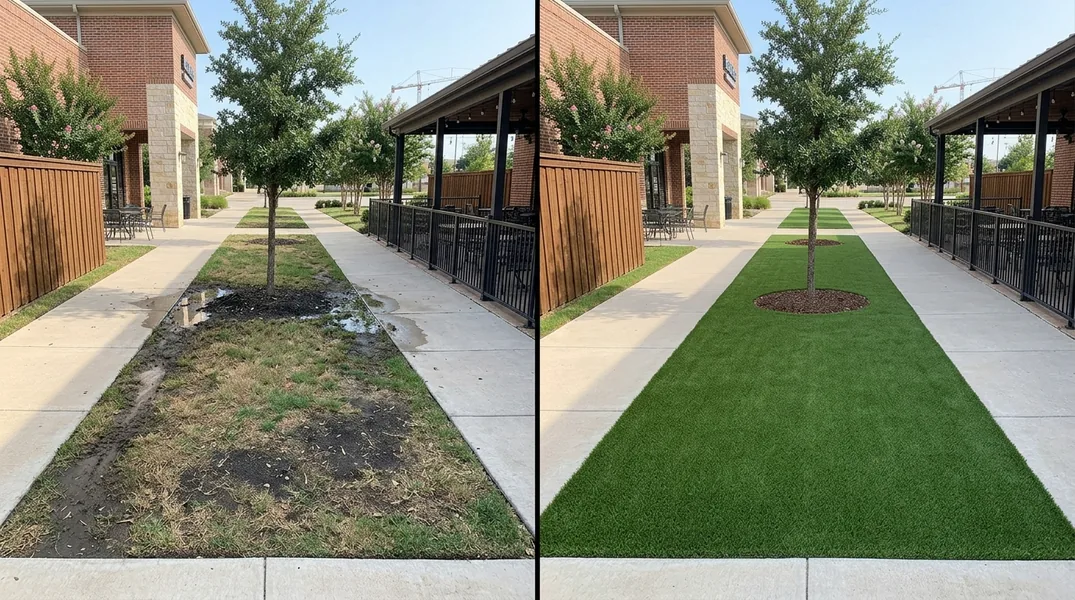
Understanding Frisco's Blackland Clay Challenge
Frisco sits in the heart of Texas blackland prairie, where the soil composition presents unique challenges for any landscaping project. Blackland clay is dense, heavy, and notoriously poor at draining water. When it rains, this soil holds moisture like a sponge, creating standing water and muddy conditions that can persist for days. For homeowners planning Residential Artificial Grass Installation, understanding this soil type is the first step toward a successful, long-lasting installation.
The problem with blackland clay isn't just surface-level wetness. When water saturates clay soil, it becomes unstable and can shift beneath your artificial turf, causing uneven settling, wrinkles, and premature wear. Poor drainage also creates an environment where mold, mildew, and odors can develop under your new turf. This is why proper base preparation and drainage solutions aren't optional in Frisco - they're absolutely essential for protecting your investment and ensuring your artificial grass performs beautifully for years to come.
What to Put Under Artificial Grass: The Foundation Layer Strategy
The materials you install beneath your artificial turf are just as important as the grass itself. Most residential installations in Frisco require a multi-layer foundation system specifically designed to combat blackland clay drainage issues. The first critical layer is a geotextile fabric, which sits directly on top of your existing soil. This permeable membrane prevents the clay below from mixing with your drainage base while still allowing water to pass through, keeping your foundation clean and stable over time.
Above the geotextile, you'll need a base material layer, typically consisting of recycled asphalt millings, crushed limestone, or engineered stone base. This layer should be compacted to about four to six inches thick, depending on your yard's water table and existing drainage conditions. The angular, interlocking nature of these materials creates air pockets and pathways for water to move laterally and downward, away from the root zone of your artificial turf. In areas with particularly poor drainage, some installers recommend a second layer of sand or fine gravel to further improve percolation. This is where professional expertise matters - Frisco Turf Installation evaluates each property individually to determine the optimal base composition for your specific soil conditions.
Artificial Grass Underlay and Drainage Fabric Essentials
Once your base is properly compacted and leveled, the next critical component is selecting the right artificial grass underlay. The underlay serves multiple functions: it provides cushioning for comfort and safety, it acts as an additional drainage barrier, and it helps stabilize the turf against shifting. In blackland clay environments, you want an underlay with excellent permeability - one that drains quickly but doesn't allow fine clay particles to migrate upward into the turf system.
Most premium underlays used for Residential Artificial Grass Installation in Frisco feature a cross-laminated design with drainage channels built into the bottom surface. These channels direct water away from the turf face and toward your perimeter drainage system or subsurface drainage lines. The thickness of your underlay typically ranges from 12 to 20 millimeters, with thicker options providing better cushioning for high-traffic areas or homes with children and pets. When combined with a proper base preparation system, quality underlay transforms your artificial grass installation from a short-term solution into a durable, comfortable outdoor space that handles heavy rain and standing water without issue.
Turf Base Prep: Grading, Compaction, and Slope Considerations
Proper grading is absolutely fundamental to artificial grass drainage success. Your installation area must slope gently away from your home's foundation and any structures, with a minimum slope of one percent (roughly one inch of drop per eight feet of distance). This gentle grade ensures that water moves consistently toward your drainage outlets rather than pooling in low spots. The compaction process is equally critical - your base material must be firmly compacted in layers using mechanical equipment to create a stable, unyielding foundation. Under-compacted base materials will settle over time, creating depressions that collect water and become eyesores.
In Frisco's blackland clay environment, many homeowners benefit from installing perimeter French drains or subsurface drainage lines during the base preparation phase. These systems collect water that percolates through your artificial grass and base layers, directing it away from your yard toward storm drains or appropriate drainage areas. The installation of these systems happens before your underlay and turf go down, making it essential to plan your drainage strategy during the initial site assessment. Frisco Turf Installation performs a thorough evaluation of your property's existing drainage patterns, soil composition, and water flow patterns to design a system that keeps your artificial grass dry and stable year-round, even during North Texas's heavy spring and summer storms.
Maintenance and Long-Term Drainage Performance
Installing the correct base and underlay system is just the beginning. Maintaining proper drainage performance over the years requires attention to a few key practices. Keep your artificial grass free of debris, leaves, and organic matter that can accumulate in the turf fibers and block water from draining through to the base layers. Periodically rinse your turf with a garden hose, especially after heavy dust or pollen events, to keep the drainage pathways open. If you've installed a Pet Turf & Dog Run Installation, be especially diligent about cleaning to prevent organic buildup that can trap moisture and create odors.
Check your perimeter drainage areas and any visible drain outlets to ensure they remain clear of obstructions. If you notice water pooling on your artificial grass after rain, or if certain areas seem consistently wet, contact Frisco Turf Installation promptly - these are signs that your drainage system may need adjustment or maintenance. Many drainage issues that appear months or years after installation can be resolved with professional inspection and minor adjustments. The investment you make in proper base preparation and underlay selection pays dividends throughout your turf's lifespan, keeping it beautiful, safe, and functional through every Texas weather event.
Getting Professional Base Prep and Drainage Installation Near Me
While some homeowners are tempted to cut corners on base preparation to reduce pricing, the reality is that inadequate drainage and foundation work almost always results in costly problems down the road. Settling, wrinkles, odors, and premature turf failure are nearly guaranteed when blackland clay isn't properly managed. This is why choosing an experienced, local installer who understands Frisco's unique soil and climate conditions is so important.
Frisco Turf Installation brings years of experience installing artificial grass in blackland clay environments throughout the Frisco area. We understand the specific challenges your property faces and design comprehensive drainage and base preparation solutions tailored to your yard's individual conditions. Whether you're planning a full Residential Artificial Grass Installation, a Pool Surround Turf project, or a specialized installation like a Putting Green Installation, we handle every aspect of base prep and drainage with professional precision. To learn more about how we can transform your yard with proper artificial grass installation, call us today at (940) 289-5633 or request a free estimate. We'll inspect your property, discuss your drainage concerns, and provide a detailed plan to ensure your artificial grass installation stands the test of time.
Looking for a professional artificial grass installation company in Frisco? Frisco Turf Installation responds fast for all your artificial grass installation needs.
Get a Free Quote